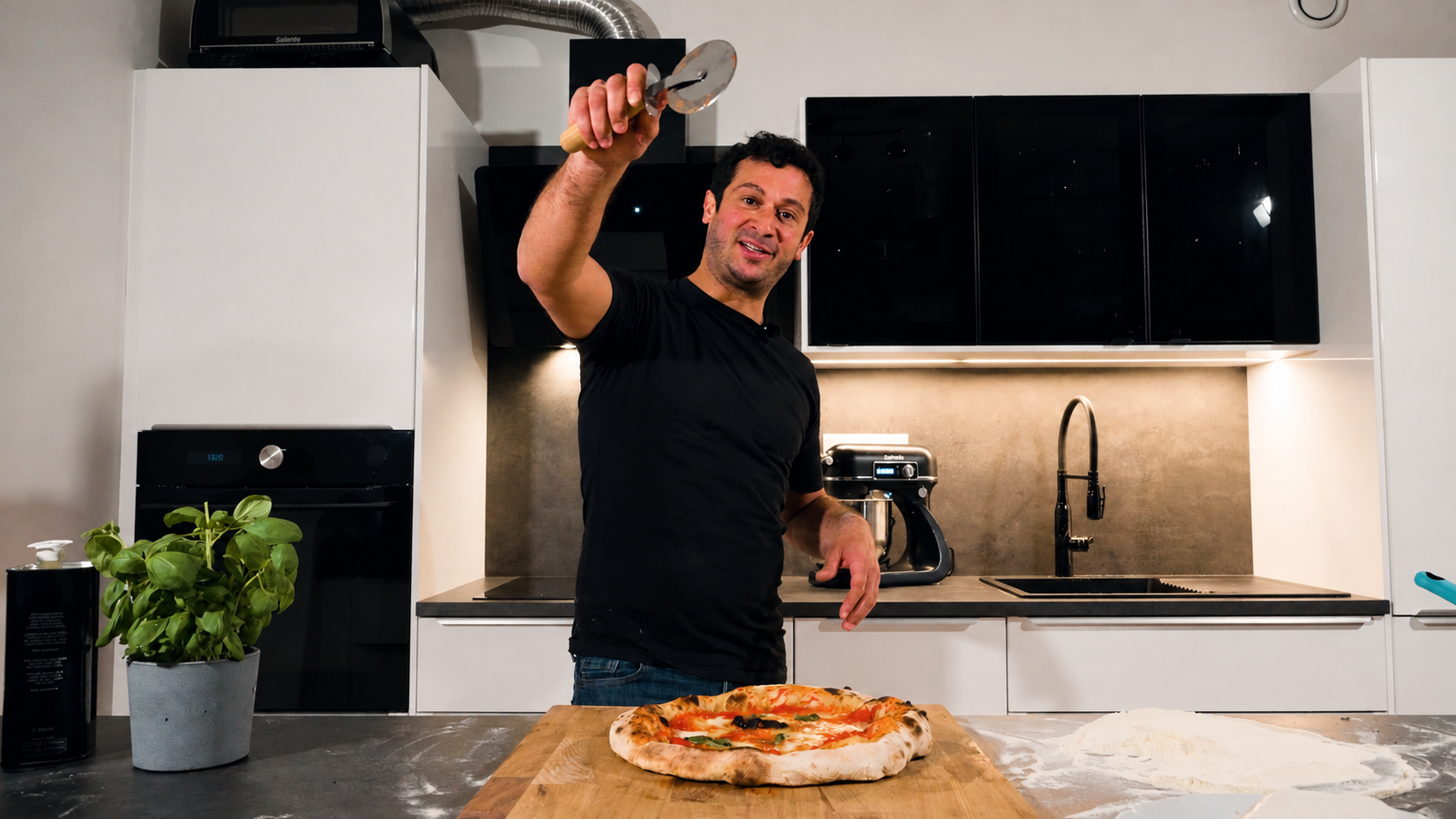
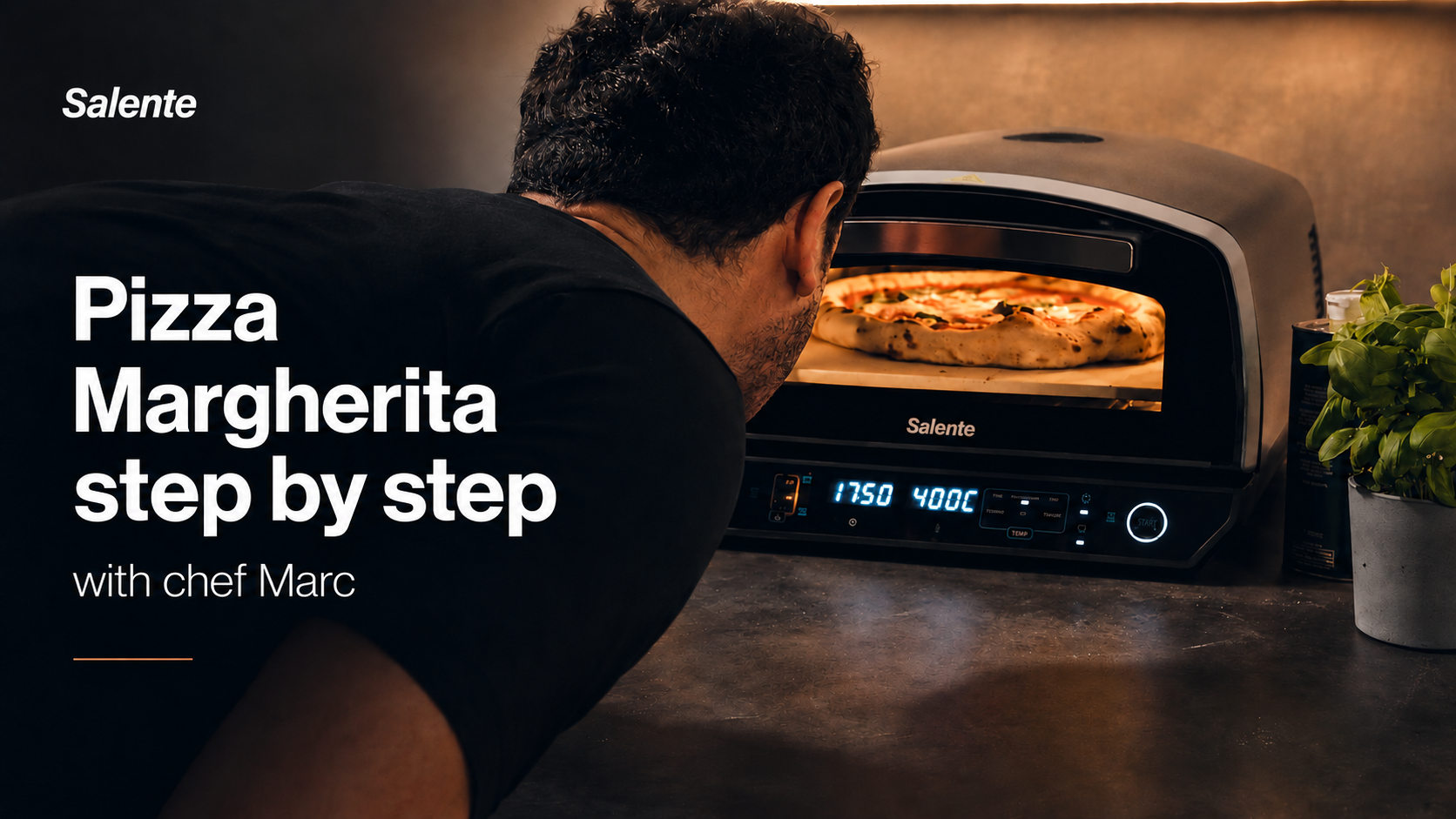
Pizza Margherita needs only a few ingredients, which is precisely why there is nowhere to hide. Good dough, tomatoes, mozzarella, fresh basil and olive oil must all work together - and a properly heated oven is just as important. In the video, Chef Marco shows how to turn this simple combination into Neapolitan-style pizza without unnecessary complications.
Quick summary
The key points:
- A proofed pizza dough is the foundation. If you are following on from the previous instalment, use the biga dough prepared according to Marco’s method.
- Do not overload your Margherita. Use just enough tomatoes and mozzarella for the dough to remain the star after baking.
- Drain fresh mozzarella thoroughly before using it. Excess water is a common cause of a soggy centre.
- Neapolitan-style pizza needs high heat, a thoroughly preheated pizza stone and a short baking time.
- The Salente Vulcano reaches up to 450 °C and has a dedicated Neapolitan pizza programme.
In this article
- What goes on a Pizza Margherita
- Prepare the dough and heat the oven thoroughly
- How to shape pizza without a rolling pin
- Tomatoes, mozzarella and basil: less is more
- Baking at high heat
- What makes the biggest difference in practice
What goes on a Pizza Margherita
Margherita is a good example of how a short ingredient list does not necessarily mean a simple preparation. The essentials are tomatoes, mozzarella or fiordilatte, fresh basil and extra virgin olive oil. You can also add a small amount of grated hard cheese if you wish.
As a guide, you can follow the rules of the Associazione Verace Pizza Napoletana (AVPN), which specify 60-80 g of peeled tomatoes, 80-100 g of mozzarella or fiordilatte, 6-7 g of extra virgin olive oil, a few basil leaves and, optionally, 5-7 g of grated hard cheese for one traditional Margherita. These topping quantities are a guide; Marco’s method in the video is the main reference for the preparation itself.
Ingredients for one pizza
|
Ingredient |
Approximate quantity |
|
proofed pizza dough ball |
1 |
|
good-quality peeled tomatoes |
60-80 g |
|
mozzarella / fiordilatte |
80-100 g |
|
extra virgin olive oil |
6-7 g |
|
fresh basil |
a few leaves |
|
grated hard cheese |
5-7 g, optional |
If you are making dough with a biga, this recipe follows directly on from our previous article, Pizza biga: Neapolitan-style dough with Chef Marco. Allow the proofed dough ball enough time to relax before shaping so that it does not spring back as you stretch it.
Prepare the dough and heat the oven thoroughly
Heat the oven first, then make the pizza. Doing it the other way round often leaves sauce-covered dough sitting on the pizza peel while the stone is still trying to reach the right temperature.
Start preheating the pizza oven well in advance. It is not enough for only the air inside to be hot. The pizza stone itself must also store up heat, as it is what starts baking the base of the pizza.
The principle behind Neapolitan-style pizza is simple: plenty of heat, very little time. If the stone is not hot enough, the top may be done before the base, leaving the dough soft or rubbery in the centre.
How to shape pizza without a rolling pin
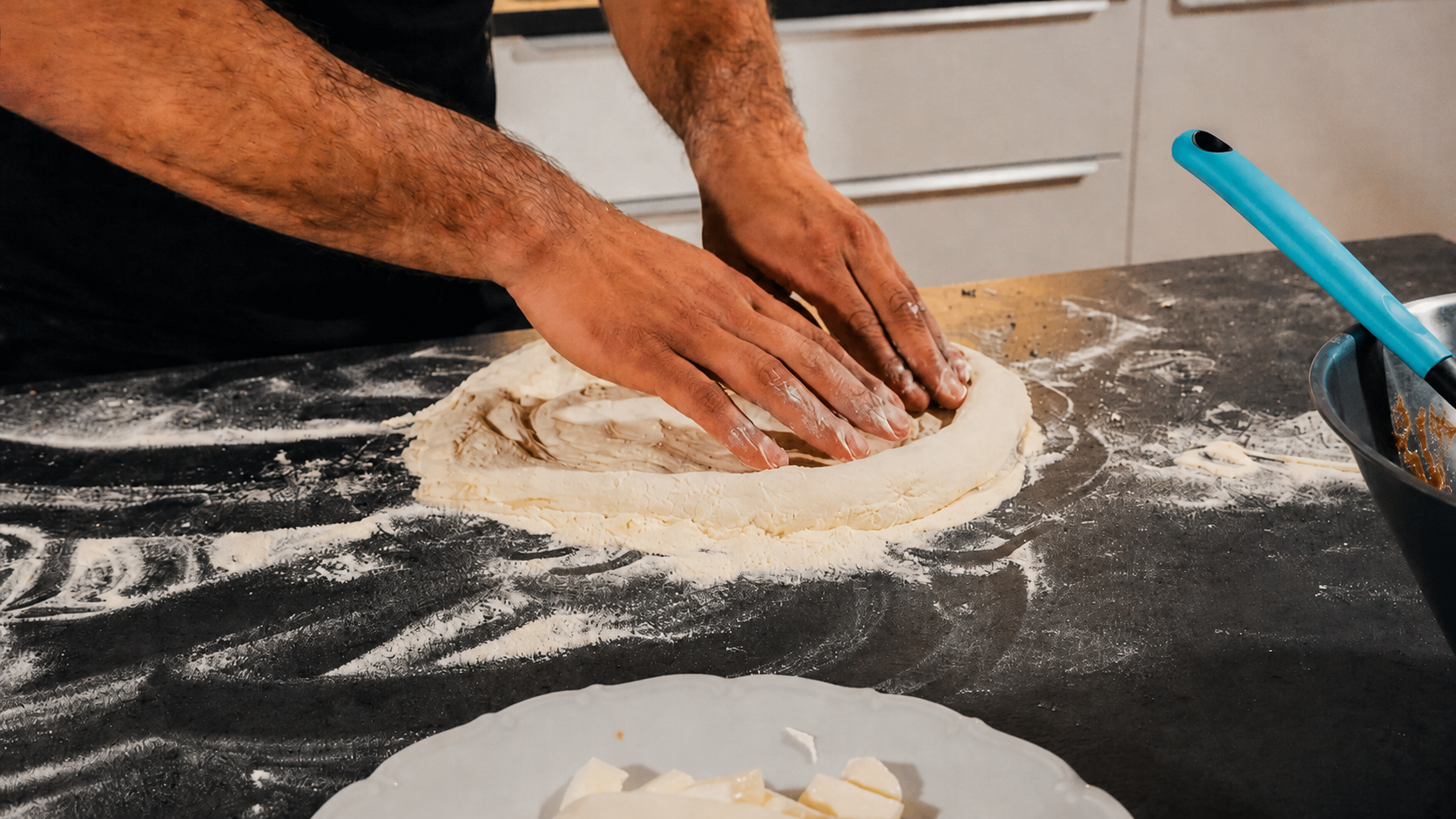
Place the dough ball on a lightly floured work surface. Use your fingers to gently press the dough from the centre outwards. Do not press down the outer 1-2 cm of the edge.
The edge retains the gas produced during fermentation. If you roll over it with a rolling pin or press it firmly with your palm, you will push much of that structure back out of the dough.
Turn and stretch the dough gradually. There is no need to chase a perfectly geometric circle. An evenly thin centre and an intact edge matter more. If the dough immediately springs back, it usually needs a little longer to rest. Do not force it; give it a few minutes, then try again.
Tomatoes, mozzarella and basil: here, less is more
There is no need to turn the tomatoes into a complicated sauce with a long list of seasonings. For a classic Margherita, it makes sense to preserve their clean flavour and light texture. Spread the sauce from the centre towards the edge, leaving the rim uncovered.
Next comes the mozzarella - and this is where a surprising number of homemade pizzas go wrong. Fresh mozzarella contains a lot of water. If you take it straight out of the brine, slice it immediately and pile plenty of it into the centre of the pizza, the excess liquid will end up on the dough as it bakes.
Slice or tear the mozzarella in advance and drain it thoroughly. Space it out over the pizza; it does not need to form an unbroken white layer. Add a few basil leaves and lightly drizzle the pizza with good-quality extra virgin olive oil.
Baking: high heat changes the result
The official AVPN rules for certified Vera Pizza Napoletana specify an oven-floor temperature of approximately 380-430 °C, a dome temperature of around 485 °C and a baking time of 60-90 seconds. A domestic electric oven is not the same as a traditional AVPN oven, but high heat can bring its baking method considerably closer.
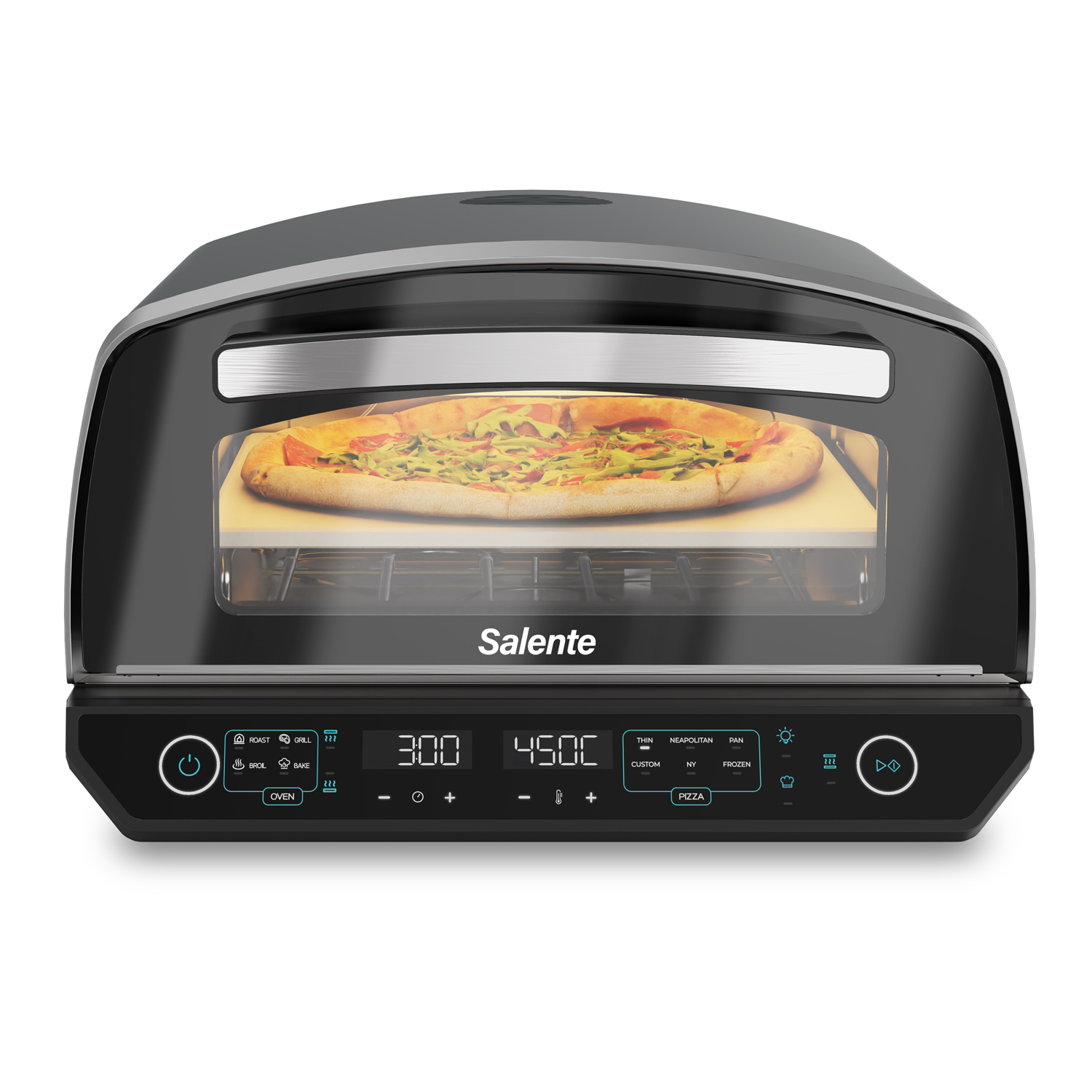
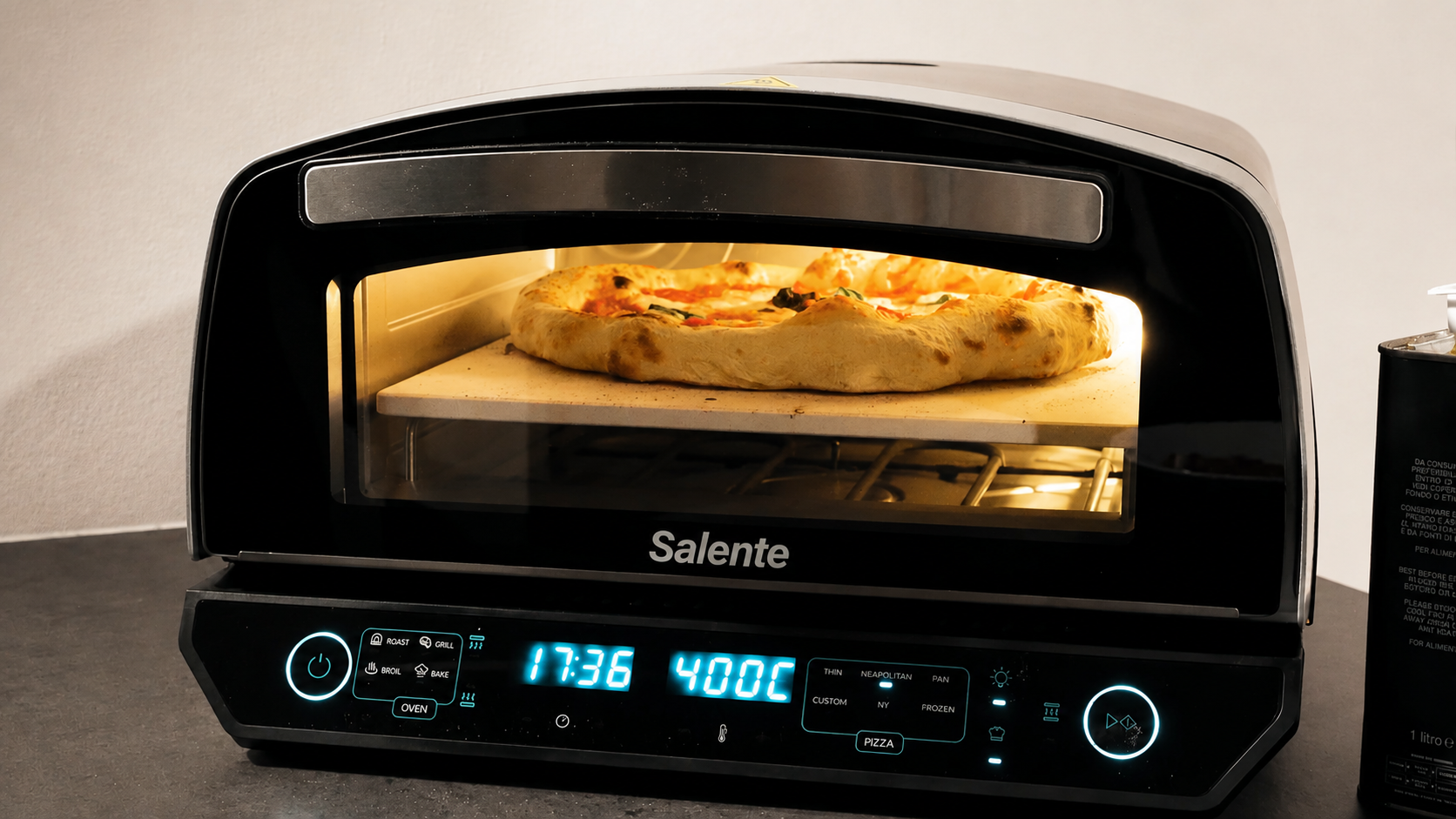
Salente Vulcano electric pizza oven reaches up to 450 °C, uses both upper and lower heating elements, and offers a dedicated Neapolitan pizza programme. The package includes a 33 × 33 cm pizza stone and a pizza peel. For a Margherita, the high heat and a thoroughly heated stone are what matter most: the base starts baking immediately and the edge has a chance to rise quickly.
Before putting the pizza in the oven:
- Allow both the oven and the stone to complete the full preheating cycle.
- Assemble the pizza just before baking so the dough does not absorb unnecessary moisture.
- Do not leave the assembled pizza sitting on the pizza peel for long - the risk of sticking increases.
- Watch the colour of both the base and the edge as it bakes, turning the pizza as needed.
What makes the biggest difference in practice
This is where theory meets the issues people encounter most often at the oven. With a Margherita, there is nowhere to hide under-proofed dough, a cold stone or overly wet mozzarella.
- A genuinely hot pizza stone. On the Vulcano product page, a customer who says in their review that they have been making Neapolitan pizza for a long time identifies the temperature as the biggest difference compared with a conventional oven: fast baking, dramatically puffed edges, characteristic blistering and a better texture underneath. This is exactly the kind of difference you can see and taste in a simple Margherita.
- Less mozzarella than you feel like adding. A Margherita does not need to be hidden under cheese. If the tomatoes remain visible between the pieces of mozzarella, that is not a mistake. In fact, it reduces the amount of moisture in the centre.
- Drain the mozzarella. If the centre of the pizza is almost liquid enough to eat with a spoon after baking, the dough or oven may not be the first culprit. Start by looking at the cheese and the amount of tomatoes.
- Assemble the pizza just before baking. Tomatoes act quickly on thin dough. An assembled pizza should not wait several minutes while you prepare the pizza peel or switch on the oven.
- Do not press down the edge when shaping. If you want an airy cornicione, you need to retain the gas that the dough produced during fermentation.
What to choose if…
If you want to continue with biga dough: start with the article Pizza biga step by step. A simple Margherita is the ideal test for well-made dough - the toppings will not hide its texture or flavour.
If you want to bake at home at temperatures close to those used for Neapolitan-style pizza: the Salente Vulcano is a sensible choice, with a maximum temperature of 450 °C and a Neapolitan pizza programme.
If you are making several pizzas for family or guests: the Vulcano offers Pizza Expert Mode, which allows the selected programme to run continuously for up to 30 minutes. This keeps the oven ready for the next pizza without restarting the entire programme each time.
If you want to explore other options: take a look at Salente pizza ovens or more pizza oven recipes.
Conclusion
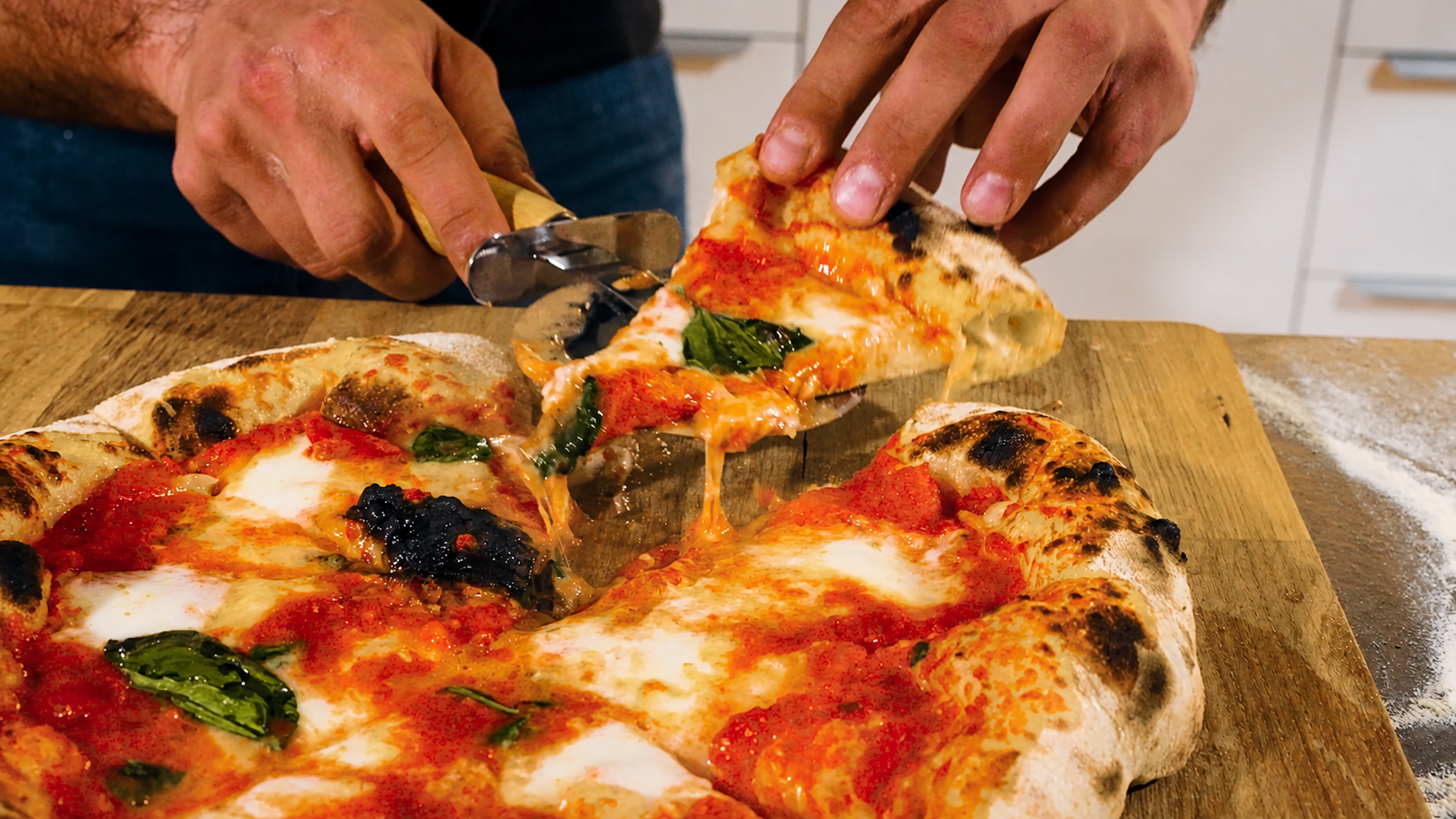
Margherita may have the simplest ingredient list of any pizza, but that is precisely what makes it such a good test of both the dough and the oven. When the dough is properly proofed, the stone is genuinely hot and the pizza is not loaded with too much wet mozzarella, there is no need to complicate matters. Tomatoes, mozzarella, basil, a little olive oil and serious heat. You can also follow the entire method in the video with Chef Marco.
FAQ
What goes on a Pizza Margherita?
The classic essentials are peeled tomatoes, mozzarella or fiordilatte, extra virgin olive oil and fresh basil. You can also add a small amount of grated hard cheese if you wish.
Which mozzarella is best for a Margherita?
Traditionally, buffalo- or cow’s-milk mozzarella, or fiordilatte, is used. For baking at home, the most important thing is to remove excess liquid and drain the cheese thoroughly in advance.
Why is the centre of my pizza soggy?
Common causes include overly wet mozzarella, too many tomatoes or simply too much topping overall. A low baking temperature can make the problem worse because the pizza has to remain in the oven for longer.
When should I add basil to pizza?
For the classic method, you can add a few leaves before baking along with the other ingredients. For a particularly fresh aroma, you can also add a few fresh leaves after taking the pizza out of the oven.
At what temperature should I bake Pizza Margherita?
Neapolitan-style pizza is baked at a very high temperature. The Salente Vulcano reaches up to 450 °C; always adjust the exact baking time to the programme used, the condition of the stone and the appearance of the pizza.
Do I need to use a rolling pin for pizza?
It is best not to use one for Neapolitan-style dough. A rolling pin pushes the gas out of the edges, so they puff up less during baking. Stretch the dough with your fingers from the centre outwards.