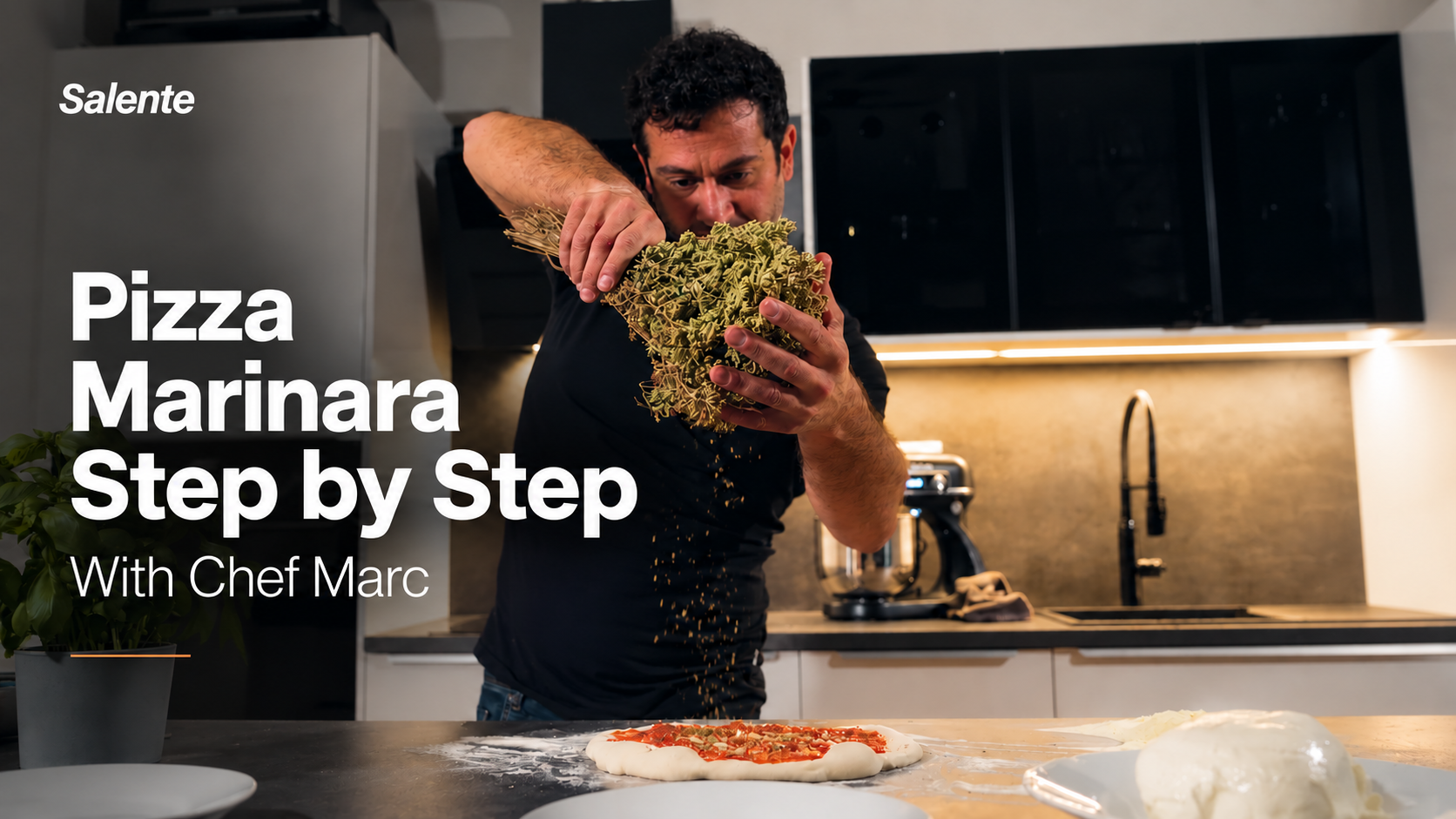
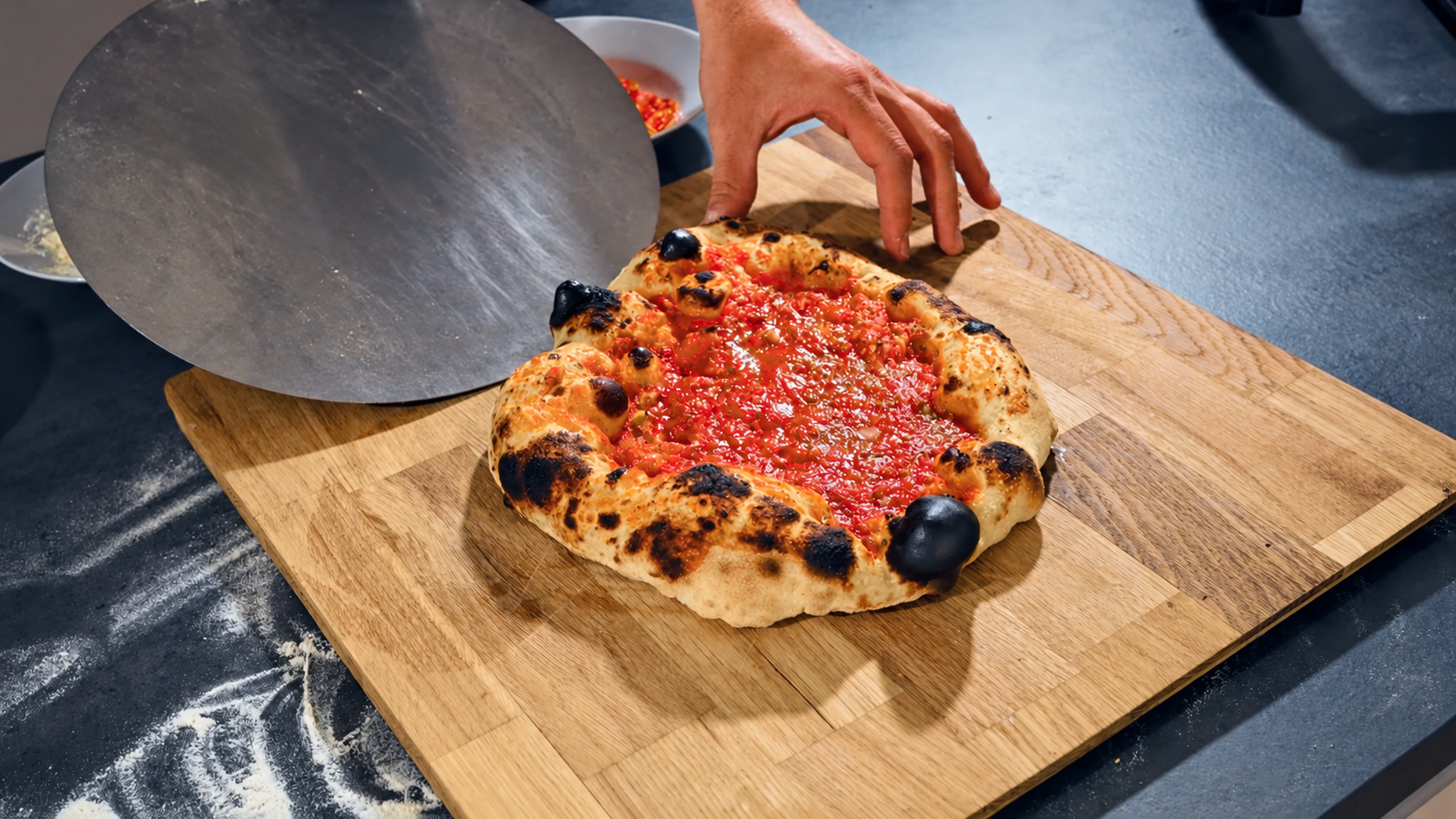
Pizza Marinara looks simple at first glance. There is no cheese or heavy topping on the dough, just tomatoes, garlic, oregano and extra virgin olive oil - so you can quickly tell whether the dough, ingredients and hot oven are all working as they should. In the next instalment of our pizza series, we make it with chef Marco.
Quick summary
Key points:
- Traditional Pizza Marinara is based on tomatoes, garlic, oregano and extra virgin olive oil. Cheese and seafood have no place in the classic version.
- For one pizza, allow up to 100 g of peeled tomatoes, one clove of garlic, a pinch of oregano and 6-8 g of extra virgin olive oil, in line with AVPN rules.
- Slice the garlic thinly and do not add more tomatoes than necessary. With such a simple pizza, you should still be able to taste the dough.
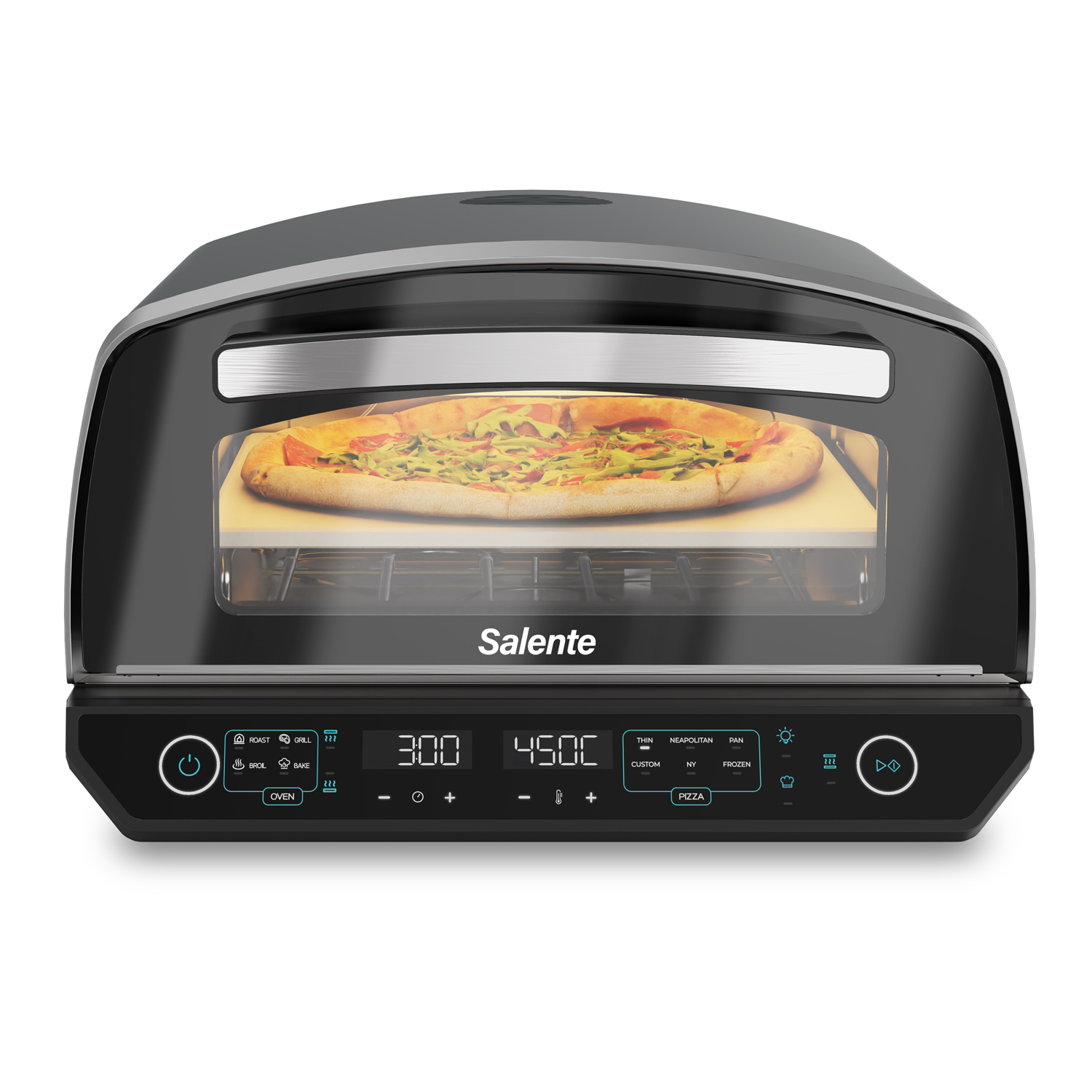
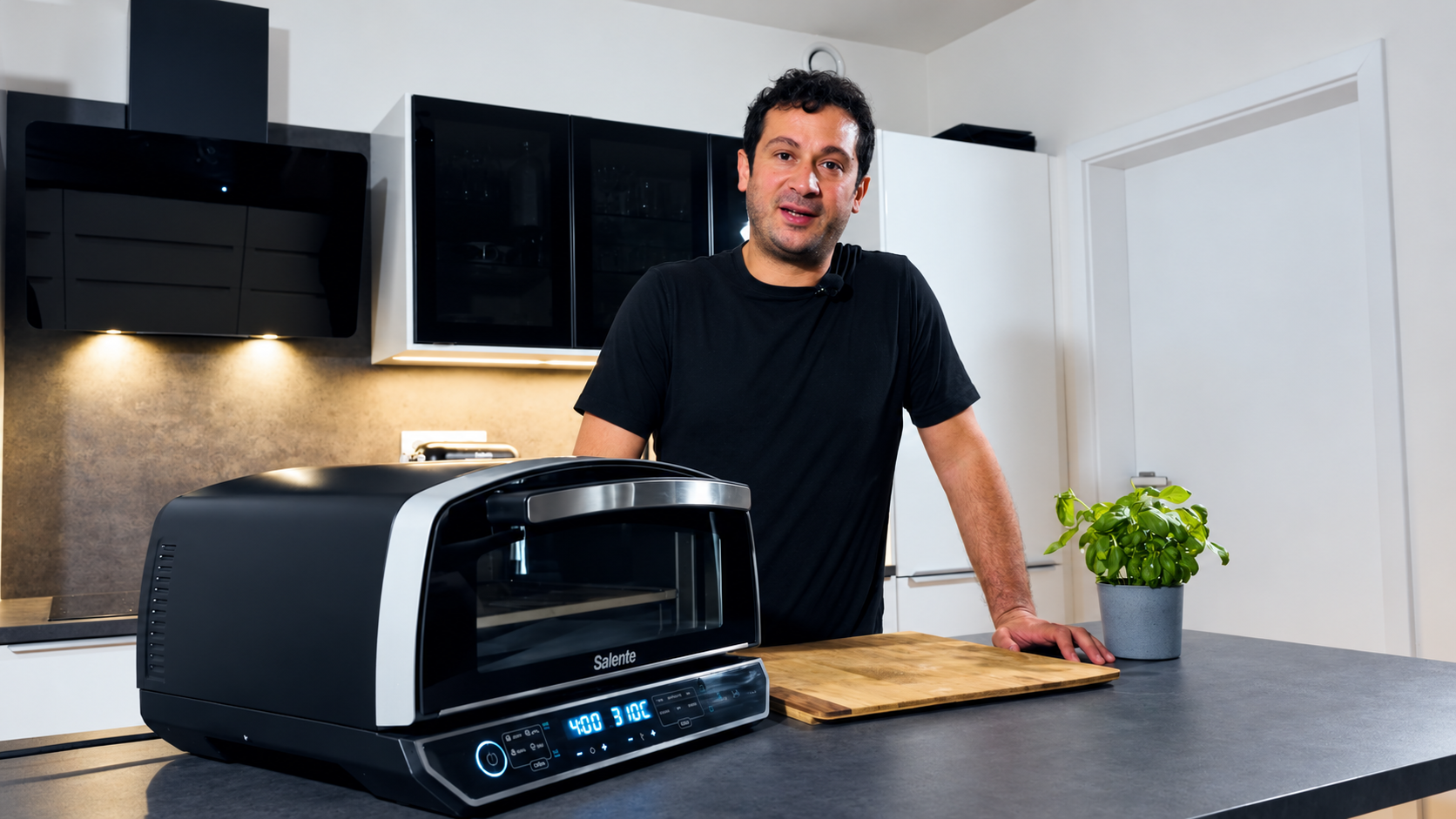
- The oven and stone must be thoroughly preheated. The Salente Vulcano reaches up to 450 °C and offers a Neapolitan pizza programme.
- If you want to follow the same series with Marco, start with biga dough prepared according to the previous recipe.
Contents
- What Pizza Marinara is and why it has no cheese
- Ingredients for one pizza
- Pizza Marinara step by step
- Baking: high heat and a hot stone
- What makes the biggest difference in practice
- What to choose if…
What Pizza Marinara is and why it has no cheese
Alongside Margherita, Marinara is one of the best-known traditional Neapolitan pizzas. The rules of the Associazione Verace Pizza Napoletana (AVPN) describe it very simply: tomatoes, garlic, oregano and extra virgin olive oil. A few basil leaves may be added, but they are not essential.
An important detail: Marinara is not “Margherita without mozzarella”. Garlic and oregano give it a flavour profile of its own. And despite its name, classic Neapolitan Marinara has nothing to do with pizza topped with prawns, mussels or tuna.
The absence of cheese is exactly what makes it interesting. There is nothing to hide the dough, tomatoes or how well the pizza is baked. Home pizza makers therefore often share one simple observation: a successful Marinara is an excellent test of whether your dough is properly prepared and your tomato base tastes good.
Ingredients for one pizza
If you are following our series with Marco, use a proofed dough ball from the Step-by-step pizza biga recipe. The topping quantities below are based on the current AVPN specification; they are not weights transcribed literally from Marco’s video.
|
Ingredient |
Approximate quantity |
|
proofed pizza dough ball |
1 pc |
|
peeled tomatoes |
up to 100 g |
|
garlic |
1 clove, approx. 3 g |
|
dried oregano |
approx. 0.5 g / a pinch |
|
extra virgin olive oil |
6-8 g |
|
fresh basil |
a few leaves, optional |
There is no need to cook the tomatoes or season them elaborately. For Neapolitan-style pizza, it makes sense to retain their clean flavour and light texture. The AVPN recommends crushing peeled tomatoes by hand; this keeps them coarser and avoids breaking up the seeds unnecessarily.
Pizza Marinara step by step
1. Preheat the oven first
Switch on the oven before you start assembling the pizza. Hot air inside is not enough - the stone also needs to accumulate heat. A stone that is not hot enough is a common reason why the top is done before the base.
2. Stretch the dough by hand
Place the dough ball on a lightly floured surface. Use your fingers to push the air from the centre outwards, leaving the last 1-2 cm of the edge as untouched as possible. Do not use a rolling pin: it would unnecessarily push the air out of the crust.
3. Add the tomatoes
Place the tomatoes in the centre and spread them towards the edge with the back of a spoon. Leave the cornicione clean. With Marinara, there is no need to make up for the missing cheese by doubling the sauce; an overly wet centre is harder to bake and transfer.
4. Slice the garlic very thinly
Cut the peeled clove into thin slices and arrange them over the tomatoes. During the short baking time, thin slices heat through more evenly than large pieces and distribute the flavour more effectively across the pizza.
5. Use oregano sparingly and add the oil last
A pinch of oregano is enough. Then drizzle the pizza with extra virgin olive oil. The AVPN recommends pouring the oil in a spiral from the centre outwards. On a simple Marinara, good oil is an integral part of the flavour, not merely a finishing touch.
Baking: high heat and a hot stone
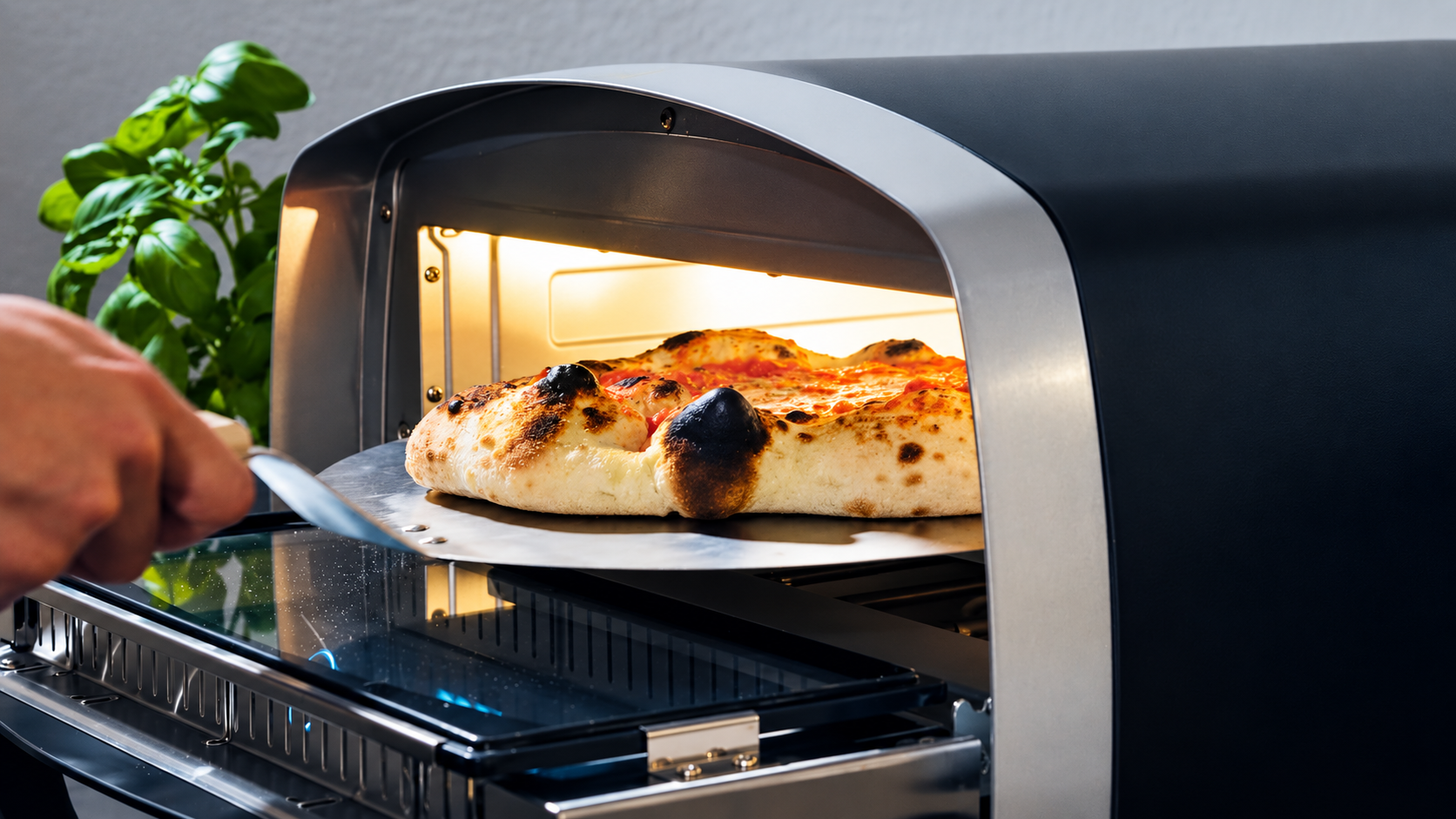
Neapolitan-style pizza follows a simple principle: plenty of heat, very little time. According to the AVPN, a certified Vera Pizza Napoletana is baked very briefly at a high temperature; a domestic electric pizza oven is not the same as the traditional oven specified in its rules, but the same principle of rapid heat transfer from a thoroughly heated stone also makes sense at home.
Salente Vulcano reaches up to 450 °C, uses upper and lower heating elements and has a Neapolitan pizza programme. The package also includes a 33 × 33 cm pizza stone and a peel. Two things are particularly important for this recipe: allow the full preheating cycle to finish and do not leave the assembled pizza sitting on the peel for long.
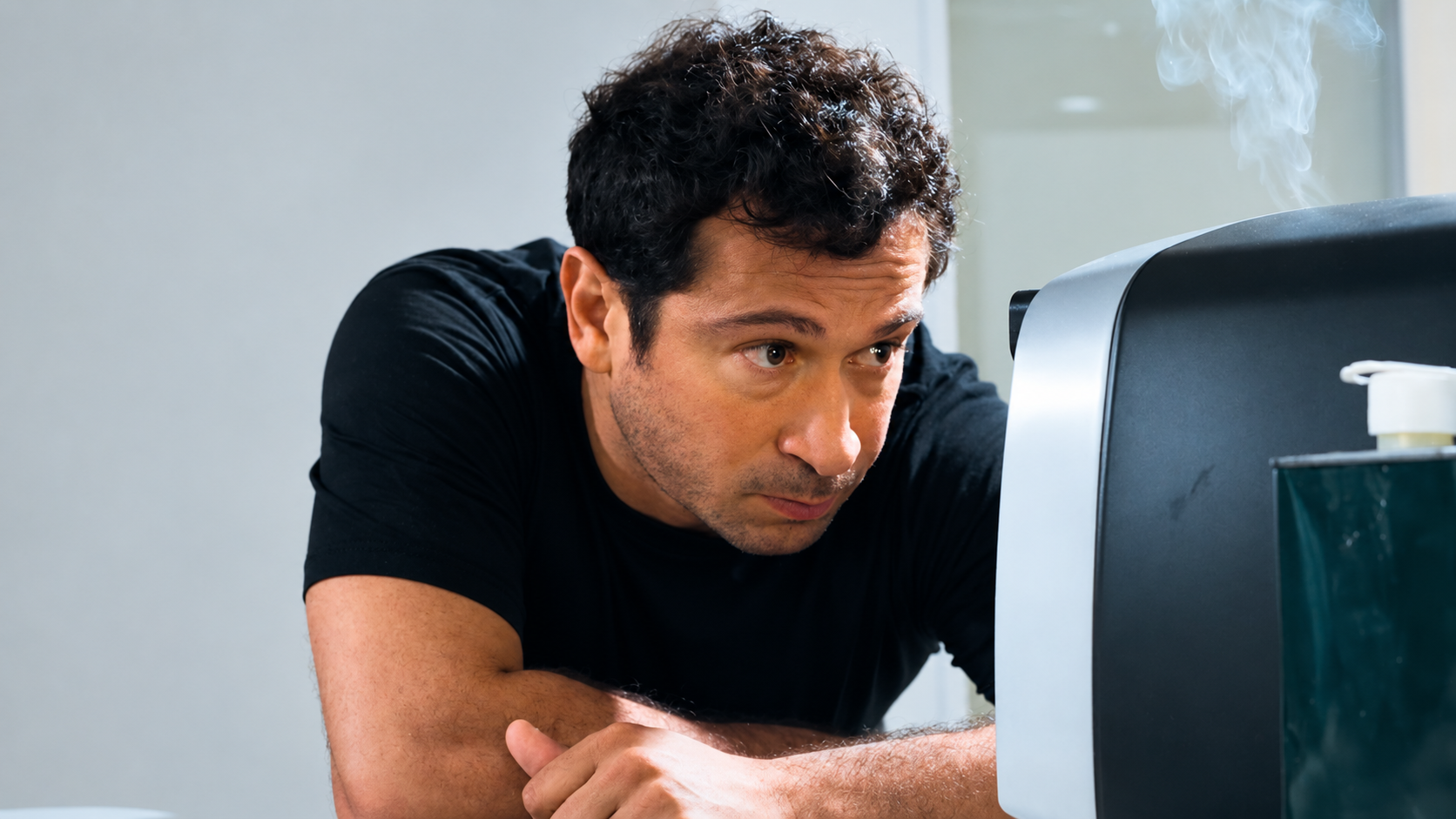
Before placing the pizza in the oven:
- allow both the oven and stone to heat thoroughly;
- assemble the pizza only just before baking;
- do not leave it waiting on the peel - the tomatoes gradually make the dough damp;
- while it bakes, watch the base and crust in particular, not just the time on the display.
What makes the biggest difference in practice
Mistakes quickly become apparent with Marinara. There is no layer of cheese to hide an overly wet centre or bland tomatoes.
- Less tomato is usually better than more. If you overload the topping, the centre is harder to bake and the pizza may stick to the peel. The sauce should complement the dough, not drown it.
- One clove of garlic is enough. Marinara should taste of garlic while remaining balanced. Thin slices distributed across the entire surface give a better result than several large pieces concentrated in one place.
- Oregano should not overpower the other ingredients. It is potent even in small quantities. A pinch is enough for its aroma to develop at high heat and blend with the tomatoes and oil.
Here is one more observation directly from a customer: in a review of the Salente Vulcano, a user who says they have mainly baked Neapolitan pizza over the past year particularly praises the high temperature. They describe fast baking, noticeably puffed crusts and a better base texture than in a conventional domestic oven. This difference is particularly easy to see with a simple Marinara.
What to choose if…
If you want to make the same dough as in the series with Marco: start with the Step-by-step pizza biga article. Marinara’s simple topping really allows the dough to shine.
If you are choosing between Marinara and Margherita: Marinara has no cheese and is topped with garlic and oregano. Pizza Margherita is based on a combination of tomatoes, mozzarella and basil.
If you want to bake regularly at high temperatures at home: the Salente Vulcano offers a maximum temperature of 450 °C, a Neapolitan pizza programme and a pizza stone in the package.
If you are looking for more inspiration: explore Salente pizza ovens or more pizza oven recipes.
Conclusion
Marinara offers few places for mistakes to hide - and that is exactly why it is worth trying. When the dough is right, the tomatoes are good and the stone is at the correct temperature, four basic ingredients are all you need. Tomatoes, garlic, oregano, olive oil. Nothing more. That is precisely its strength.
You can also follow the complete method in the video with chef Marco.
FAQ
What goes on Pizza Marinara?
Classic Neapolitan Marinara is made with tomatoes, garlic, oregano and extra virgin olive oil. A few basil leaves may be added, but they are not an essential ingredient.
Is Pizza Marinara cheese-free?
Yes. Traditional Marinara contains neither mozzarella nor any other cheese. This is one of the ways in which it differs from Margherita.
Does Pizza Marinara contain seafood?
No. Although the name may suggest otherwise, classic Pizza Marinara contains no prawns, mussels, tuna or other seafood.
How much garlic should you put on Pizza Marinara?
The AVPN specifies one clove, approximately 3 g. Cut it into thin slices and distribute them evenly over the tomatoes.
Which tomatoes should you use for Marinara?
Good-quality peeled tomatoes are an excellent choice. The AVPN recommends crushing peeled tomatoes by hand so that they retain a pleasant texture.
At what temperature should you bake Pizza Marinara?
Neapolitan-style pizza uses a very high temperature and a short baking time. The Salente Vulcano reaches up to 450 °C; adjust the exact time to the programme, the temperature of the stone and the appearance of the pizza.
Can I bake Marinara in a conventional oven?
Yes. A pizza stone or steel and the oven’s maximum temperature will help. However, expect a longer baking time and a different dough texture than in a pizza oven at around 400-450 °C.